school · students
Brandon's composition
A simple January assignment, a very quiet boy, and the back of a pickup truck heading to the wholesale market at five in the morning.
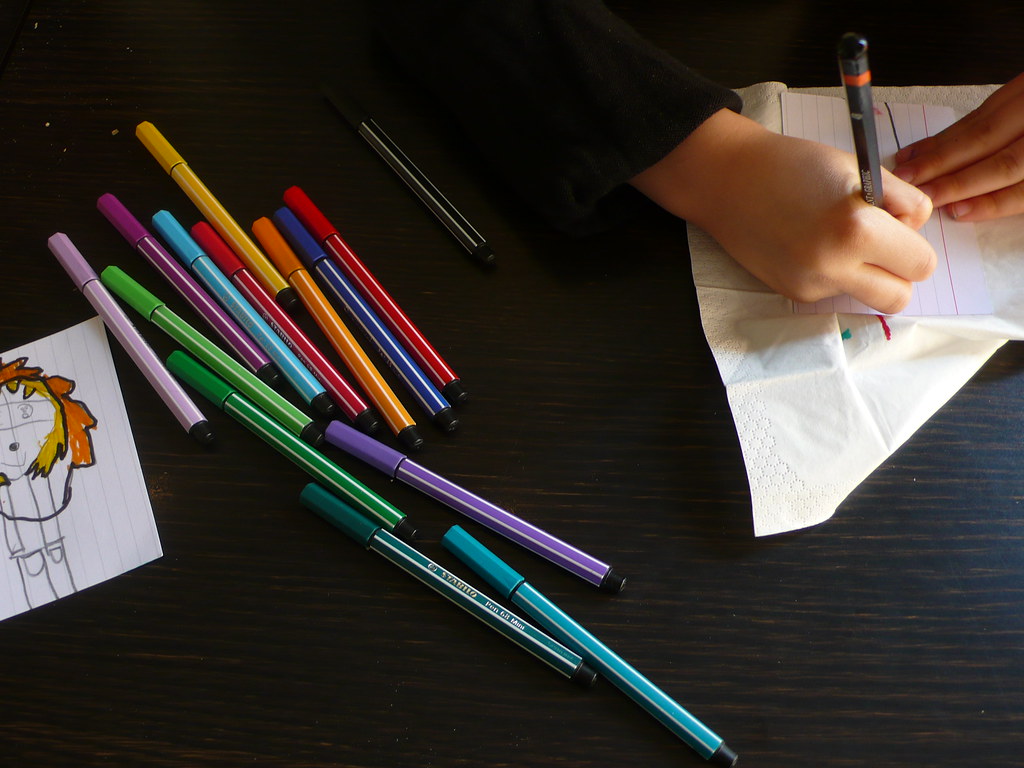
Every January, when we come back from the holidays, I give my fourth graders the same assignment: write about a place where you feel happy. I don't ask for somewhere pretty or far away. I tell them it can be a corner of the house, the shop on the corner, an aunt's lap. I have been doing this for so many years that I know, more or less, what will come back: the beach at Puerto Escondido they visited once, the bedroom with the video game, grandma's house in Tlacolula. There is almost always a dog.
This year Brandon wrote about the back of his father's pickup.
Brandon is one of those children who sit in the third row, neither at the front nor at the back, like someone who doesn't want to bother anybody. His handwriting is cramped and he erases a lot; his notebooks have the grey eraser smudges of children who doubt themselves. At parent meetings his mother always asks me whether he behaves, and I tell her yes, he behaves too well, and she can't tell whether that's praise or a complaint. Sometimes neither can I.
Five in the morning
His composition filled a page and a half. He wrote that on Saturdays his father wakes him while it is still dark to go to the Central de Abasto, the big wholesale market, and buy tomatoes and chile de agua for their stall. That he rides in the back, between the empty crates, wrapped in a blanket that smells of gasoline. That the early air in Oaxaca is cold even when the sun is about to come up, and that on the ring road he lies on his back and watches the power lines move like the ruled lines of a notebook. He wrote: "Back there nobody asks me anything and I think my own things."
I read that sentence three times at the dining table, my coffee gone cold. I thought of all the times I have asked Brandon questions in front of his classmates, with the best intentions, to get him to take part, and of how his ears turn red before he answers.
The next day I asked whether I could read it aloud. He looked at me as if I had asked to borrow one of his shoes. I told him he didn't have to. He thought about it all morning, and at recess he came up to my desk and said yes, but not to say his name. I didn't. I read it slowly and the room fell into that rare silence you never get by shouting. When I finished, Ángel, the most restless one, put his hand up to ask if crates of tomatoes are heavy. Brandon answered from his seat, without raising his hand: "The full ones are." Everyone laughed, and so did he.
What you learn late
Twenty-seven years of teaching and I am still surprised by how little I know about what goes on inside my students. You think you know them because you know who eats his lunch before recess, whose mother is in the United States, who knows the times tables and who guesses them. Then a page and a half arrives, full of spelling mistakes, and shows you that a nine-year-old has a place of his own, with power lines and the smell of gasoline, where he thinks his own things.
I don't know what Brandon thinks about. I am not going to ask. I corrected cobija, the word for blanket, which he had spelled with a v, and put a little green star in the corner, the kind I hardly use now because fourth graders say they are for little kids. He handed the page back at the end of the week without the star: he had cut it out carefully and glued it to the cover of his Spanish notebook.
Since then, when I need to ask him something, I go to his desk and ask quietly. He answers just as fast as the others. Sometimes better.
Keep reading
My mother and the rain
September afternoons on the porch: my mother shelling beans under the downpour and naming, without hesitation, every plant in the patio.
The voice in the middle
Eighteen years singing alto in my parish choir, where nobody hums your part and yet everybody needs it.
The rooms upstairs
An Easter week without my sons, two bedrooms I no longer know what to call, and an ironing board that finally found its place.